Showing posts with label fabric. Show all posts

Tuesday, 14 August 2012

Fabric Care - It's easy!

When you like a garment or any fabric product, the first thing that comes to your mind is its care.
Will it be tedious to maintain, will it need extra care, will it be expensive to preserve? and such are the questions that sometimes make you keep the perfectly good looking fabric back on the shelf. Isn't it?

It's not really your fault... Sometimes products do not carry care instructions making it even more difficult for us to decide. And sometimes the instructions despite of being attached, add to the confusion because we do not understand it.

Care instructions are standardized and not very difficult to understand. In this post I will simplify the symbols for you. 

But before I start, I would like to highlight an important fact. Something that we usually very conveniently forget - Fabrics are perishable. 

Yes, they are. We often get attached to our favorite dress, linen etc. and hope that they will remain as is cos we are following the care instructions. And when it looks old, loses it's shine, we blame the manufacturing or the seller. Please bear in mind that the instructions are a guide to help us understand what suits the fabric best and help keep it intact. It does not prolong its life till eternity.  


Each fabric possesses a unique quality, has a different life span and reacts differently to weather, water, heat and soap. 


Below are some care instructions that are most commonly found on care labels and come handy while purchasing.


There are many more symbols but I will update you with that information in my next post. Learn these by heart till then :)


Along with care symbols, I thought of sharing some tips on washing, drying and ironing.


Tips on washing

  • Always be sure to check the pockets of all garments before washing and drying. The stains and damage which can result from one hidden lipstick, lip balm, stick of gum or crayon goes beyond words!
  • Wash all of your clothes inside out to protect the fibers against damage from the
    washing machine drum or from e.g. zippers in other clothes.
  • Sort articles by color, keeping whites, darks, and medium colors together. Lighter garments can pick up dyes from darker colors. 
  • Wash heavily soiled, dirty, items separately from slightly soiled items. This will help prevent fading and keep colors brighter.
  • Garments which generate lint, such as fleece sweat shirts and towels, should be washed separately.
  • It is recommended to save energy and water by washing at low temperatures.
  • Most modern washing machines produce effective results even when they are completely full. Therefore, you should fill the machine completely instead of running it half full.

Tips on drying

  • Follow label instructions for drying your clothes. Some fabrics require that you tumble dry them in low heat, or that you don't tumble dry them at all.
  • Do not dry colored fabrics in direct sunlight. This can cause the color to fade.
  • Dry the fabrics flat to avoid wrinkles.

Tips on ironing

  • Be sure you read the care label for the proper ironing procedure and temperature setting to use.
  • Do not iron items which are dirty or stained. Heat from the iron will set stains.
  • Keep the iron and the ironing board cover clean to avoid soiling the clean garments/fabric being ironed.
  • Garments which are drip-dry should be pressed while damp on the wrong side, using a cool iron. If finishing the right side, use a pressing cloth.

Tips on stain removal - for treating specific stains on washable fabrics.

  • Deal with the stain as soon as possible. The longer you wait the more time the stain has to soak in and/or dry, making it more difficult to remove.
  • Lift or gently scrap off any excess material from the fabric. Use a cloth or a towel to gently blot and soak up any liquid. Don't rub! Rubbing can spread the stain and cause it to penetrate deeper into the fabric.
  • Identify what caused the stain. In order to know what to do for the stain, you need to know what caused it.
  • Follow the instructions on any presoak, prewash or stain removers. It's best to test a small out of the way area of the fabric first.
  • If stains aren't entirely removed after washing, try rewashing the item. Allowing the item to dry, or putting it in the dryer, can set the stain for good.

So...from now on you wont feel bad for yourself for losing out on a stunning dress or a great decor fabric. Now you can make an informed decision.


Happy shopping :)

Wednesday, 27 June 2012

SILK... the ageless fabric!


We wear it! We flaunt it! We love it! 
Don't you wonder whats so great about Silk that we can't seem to have enough of it?
Most of us have used this fabric in one or many forms. Be it clothes, upholstery or to beautify our living space.

I think it is the remarkable process that plays a big role in turning merely nothing into a beautiful precious fabric. I learnt a lot about the process, literally stage by stage during my recent visit to China and I think that's one of the best take aways from the trip :)

I'll take you through the process with the help of these pictures that I took at the Silk Museum in Shanghai.
We all have studied the lifecycle of a silk worm in school so I'll not get into details but this was very interesting and as they say 'practical is always better than theory' ....I agree completely :)


Stage 1 to 4 : The female moth lays tiny EGGS, the CATERPILLAR hatches out of the egg. It feeds on Mulberry leaves and grows bigger into a LARVA and starts spinning a cocoon of silk threads around itself. Inside the cocoon the caterpillar changes into a PUPA.


Stage 5 : The Pupa changes into a moth and comes out of the cocoon. 
They mate again and the cycle goes on...


What they leave behind is the silk cocoon!
People unwind the silk thread from the cocoon to weave silk cloth.


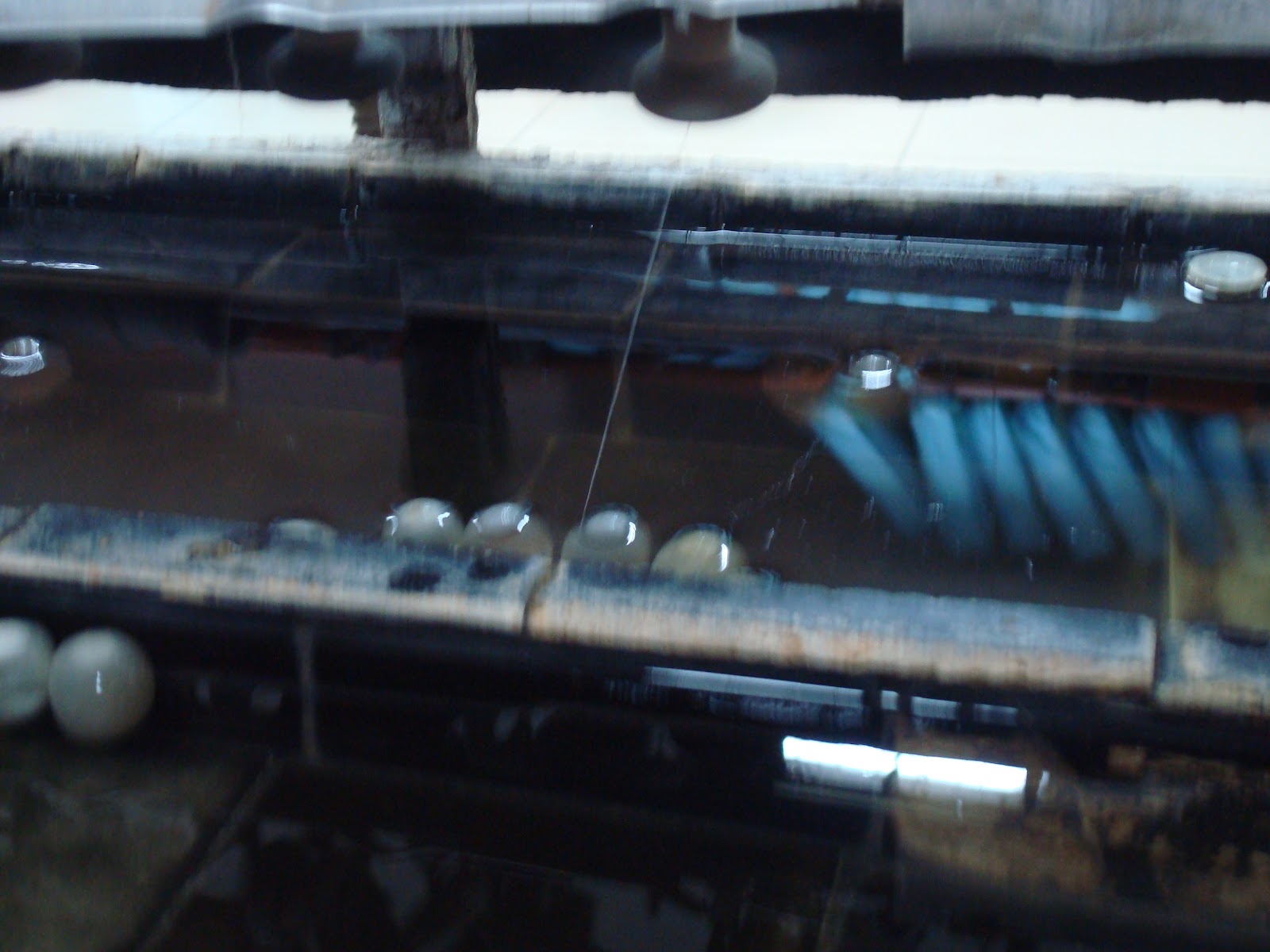
They keep the cocoons submerged in cold water for hours. That loosens out the silk and makes it easier to remove off the shell. Once the silk is soft and loose, the thread gets attached to the winding machine and starts spinning on the winding tube.


Once it is spun, it is put to dry on an inverted U shaped pipe. (see the picture below) 
The dry weave is further processed to make usable fabric.


Now this is amazing and fun!! The weave that you saw in the above picture is stretched manually from all sides to cover the length of a king size blanket!! YUP! All from that small swirl of thread. Its a single thread that goes round and round to give one entire layer for the blanket! Many such threads are spread layer on layer to make it thick n fluffy.


That was the amazing part... and the fun part was when they let US do it! :) The blanket is unbelievably soft and is all weather! I got myself two :) 
Well, Im lucky to get a chance to visit a place where I can see the trasformation from eggs to blanket but we dont get such a chance every time we are buying silk right? So I thought I'll also share tips that will help you distinguish between pure and fake silk. 


How to differentiate between pure Silk and Look alikes?

A lot of times its confusing when the seller poses a particular fabric as pure silk. Of Course, the need to differentiate between real silk and look alike is the basic reason of cost. Silk costs a lot more than the “fake silk”.

Polyester and Nylon are the most common fabrics that are passed of, or can be used to look like silk. It is
relatively easy for all of us to differentiate between cotton and synthetic fibres. But the properties of
Polyester and Nylon make it possible for them to be passed off as Silk. 

So this is how you can differentiate the real Silk :-
Cut a small piece of fabric about 1 to 2 cms, or if your situation does not permit, take some threads from any one of the corners (Even 2 threads of 1 inch length is sufficient). With a matchstick or a lighter make a flame and slowly bring the threads in contact with the flame.(Be careful not the burn your fingers). Do not burn the entire threads, just a little on the edges. Observe the thread as it burns.

If the sample is pure Silk the threads will burn and turn to black ash. It will stop burning as soon as the threads are taken away from the flame.
If instead, the threads burn, and when the thread is taken away from the flame it continues to burn a little. Just observe the ends of the thread remaining after the burning. If there is a formation of small glass like(plastic like) beads at the ends of the threads, the said sample is not Silk but Polyester or Nylon. 


I hope you enjoyed reading the post and from now on you need not worry about getting duped in the name of Pure silk!

Please share your feedback, comments and any additional information you think will be useful to our friends :)
Creative Commons License
This work is licensed under a Creative Commons Attribution-NonCommercial-NoDerivs 3.0 Unported License.